Kasa vs TP-Link smart plugs is one of the most searched smart home questions, and it trips people up for a good reason: there isn’t actually a separate “TP-Link” smart plug on shelves anymore. Kasa is TP-Link’s own smart home brand, the name on the box you’ll find at most retailers, while TP-Link is the parent company behind the router in your closet.
So what are people really comparing when they type this into Google? Almost always it’s Kasa against Tapo, TP-Link’s newer, budget-leaning smart home line. Both are built by the same company, sold on the same Amazon storefront, and solve the same basic problem, but they target slightly different buyers, and mixing them up can mean paying for features you don’t need or missing one you do.
We dug into the two current flagship 15A smart plugs, the Kasa Smart Plug KP125M and the Tapo P125M, to clear up exactly where TP-Link’s two brands overlap and where they genuinely differ.
TP-Link built Kasa first, and it’s still the brand with the longer history and the bigger footprint in US homes. Tapo arrived later as a leaner, more budget-conscious line aimed at buyers who want the newest smart home standards, like Matter, without paying a premium. Understanding that history helps explain why the two product lines look so similar on the surface but make different tradeoffs underneath.
How We Picked
We compared official spec sheets and support documentation from TP-Link’s Kasa and Tapo product pages, cross-checked feature claims against independent smart home reviews, and looked at patterns in verified owner feedback for both plugs. We focused on each brand’s current mini smart plug with energy monitoring, since that’s the closest apples-to-apples matchup between the two lines.
Kasa vs Tapo (TP-Link), At a Glance
| Smart Plug | Price | Best For | Our Rating |
|---|---|---|---|
| Kasa Smart Plug KP125M | Check price | Alexa & Google Home households | 4.6 / 5 |
| Tapo P125M | Check price | Matter & Apple Home users | 4.6 / 5 |
Both plugs sit in the same general price range, with Tapo typically landing as the slightly more affordable of the two once you compare per-plug cost across multipacks.
1. Kasa Smart Plug KP125M, Best for Alexa & Google Home Households
The Kasa Smart Plug KP125M is the pick for anyone who already has a shelf full of Echo or Nest devices. Kasa has supported Alexa and Google Assistant since its earliest smart plugs, and that maturity shows in how smoothly it hands off to voice routines, groups, and third-party automation apps.
Energy monitoring is where this plug pulls ahead of Tapo. The Kasa app shows real-time wattage plus historical usage graphs that owners and independent reviewers describe as tracking closely with dedicated power meters, useful if you’re trying to figure out what an old space heater or window AC unit is actually costing you to run.
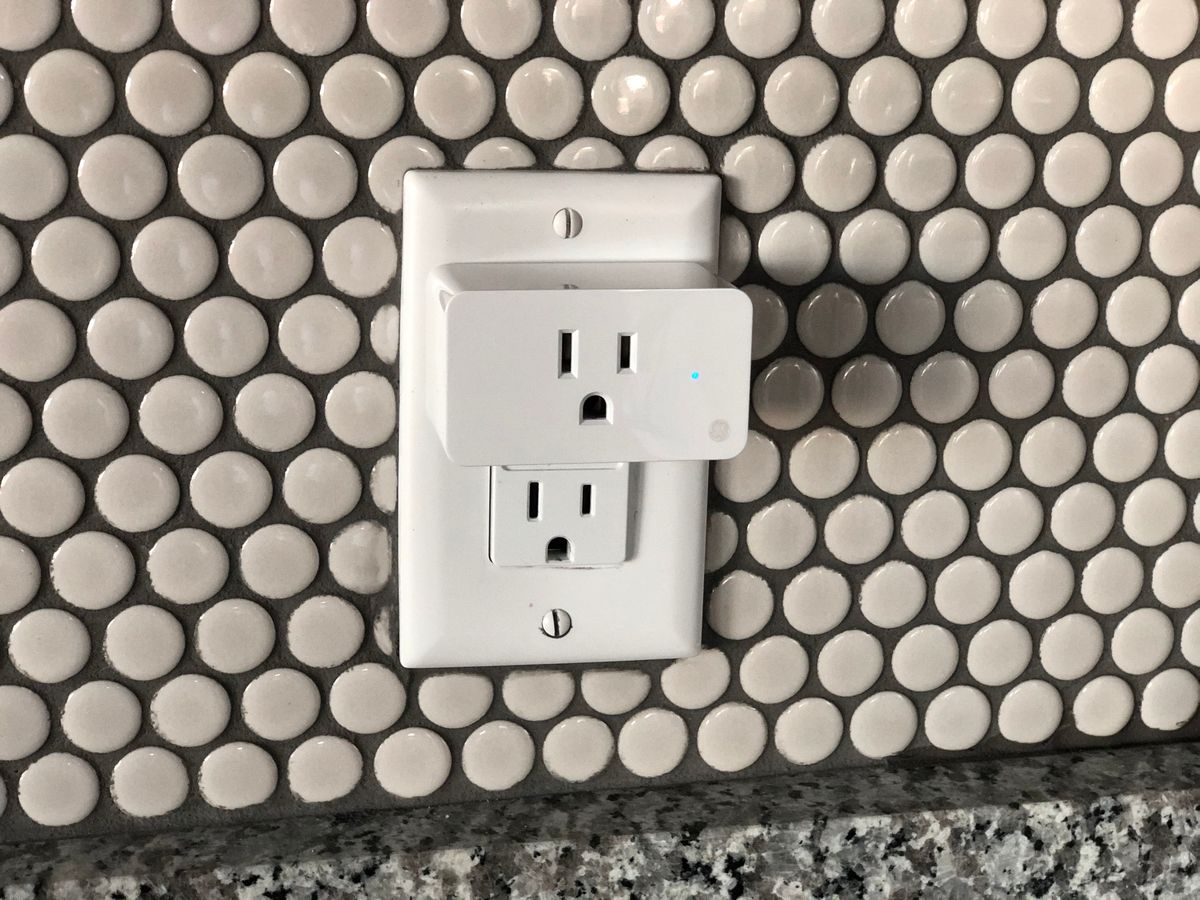
Physically, the KP125M is TP-Link’s smallest Kasa plug to date, small enough that a second plug can share the other socket in a duplex outlet without getting blocked. It’s Matter compatible on top of its native Alexa, Google Assistant, and Siri Shortcuts support, and setup skips a hub entirely, just 2.4GHz Wi-Fi and the Kasa app.
Scheduling and away mode both work well for basic automation, like turning on a lamp at sunset or making a room look occupied while you’re traveling. If you’re already invested in the Kasa ecosystem with switches or other plugs, this model groups cleanly with the rest of your devices for one-tap scenes.
Kasa Smart Plug KP125M with Energy Monitoring (2-Pack)
- Real-time and historical energy monitoring in the Kasa app
- Matter compatible, plus native Alexa, Google Assistant, and Siri Shortcuts support
- Compact design lets two plugs share one duplex outlet without blocking the second socket
- Scheduling, away mode, and one-tap grouping with other Kasa devices
As an Amazon Associate, HomeTechVerdict earns from qualifying purchases. Tap through for the current live price on Amazon.
2. Tapo P125M, Best for Matter & Apple Home Users
The Tapo P125M is TP-Link’s answer for anyone who wants Apple Home support without buying a separate hub or bridge. Because it’s Matter-certified over Wi-Fi, it pairs directly with Apple Home, Google Home, or Alexa, and once it’s set up, automations can run locally on your home network instead of routing through a cloud account every time.
That local control is a real advantage over older-style smart plugs, including some Kasa models, that depend on a round trip to the manufacturer’s servers for every command. It also means Tapo plugs tend to keep responding even during a brief internet outage, as long as your home Wi-Fi and hub are still up.
Tapo positions itself as the more affordable of TP-Link’s two lines, and the P125M’s compact mini design keeps it from blocking neighboring outlets. It carries the same 15A/1800W max rating and UL certification as the Kasa plug, so it’s rated for the same everyday appliances, lamps, fans, and space heaters included.
The tradeoff is energy monitoring precision and app maturity. Tapo’s usage graphs are fine for spotting general trends, but reviewers and owners generally rate them as less exact than Kasa’s for auditing precise costs, and the Tapo app has a shorter track record with deep third-party integrations.
TP-Link Tapo P125M Matter Smart Plug Mini
- Matter over Wi-Fi for native Apple Home, Google Home, and Alexa pairing
- Local control once set up, automations run without needing the cloud
- Mini form factor fits flush against adjacent outlets and furniture
- 15A/1800W max rating, UL certified for household appliances
As an Amazon Associate, HomeTechVerdict earns from qualifying purchases. Tap through for the current live price on Amazon.
Pros
- Both lines run on reliable, well-tested TP-Link hardware backed by a decade of smart plug manufacturing
- Neither plug needs a separate hub, both connect straight to 2.4GHz Wi-Fi
- Kasa's energy monitoring is noticeably more accurate than Tapo's for tracking device power use
- Tapo's Matter-enabled models add native Apple Home support without routing through a TP-Link cloud account
- Both apps support scheduling, away mode, and grouping plugs for one-tap control
Cons
- Confusing branding means many shoppers don't realize Kasa and Tapo are made by the same company
- The Kasa app cannot control Tapo devices, so mixing the two lines means running two apps
- Only the newer Matter-labeled models (like the Tapo P125M) work natively with Apple Home
- Both plugs are 2.4GHz Wi-Fi only, so they won't join a 5GHz-only network
Kasa and Tapo Apps, Why You Can’t Mix Them
This is the part that catches new buyers off guard. Even though Kasa and Tapo are both TP-Link products, their apps don’t fully interoperate. The Kasa app only recognizes Kasa-branded devices, and it won’t add or control a Tapo plug.
The Tapo app has broadened its reach faster, and TP-Link has been folding some older Kasa device support into it, but that coverage isn’t universal across every model. The safest assumption if you’re buying today is that each brand needs its own app, even though both can still connect to a shared Alexa or Google Home app for voice commands and cross-brand routines.
If you want a single smart home app experience, standardizing on one TP-Link line, either all Kasa or all Tapo, saves you from juggling two apps just to manage your smart plugs.
There’s a workaround worth knowing about: since both plugs support Matter, you can add either one to a Matter-based hub, like an Apple Home hub, a Google Home speaker or display, or an Amazon Echo with a built-in hub, and control both brands from that single app instead. You lose a few brand-specific extras, like Kasa’s detailed energy history graphs, but you gain one interface for turning things on and off, building routines, and grouping devices regardless of which TP-Link line they came from.
How to Choose Between Kasa and Tapo
Check what smart home hub you actually use. If you’re on Apple Home, Tapo’s Matter-certified models are the more direct path in. If you’re all-in on Alexa or Google Home, Kasa’s longer integration history makes for a smoother experience.
Decide how much you care about exact energy costs. If you want to audit what a specific appliance costs to run, Kasa’s more accurate monitoring is worth the small price difference. If you just want a general sense of usage, Tapo’s tracking is good enough.
Think about your existing devices. If you already own several Kasa switches or plugs, staying in that ecosystem keeps everything in one app. The same logic applies if you’re starting fresh with Tapo.
Don’t expect the apps to merge. Budget for one app per brand if you end up with both, and rely on Alexa or Google Home as the shared control layer if you want everything in one place for voice commands.
Our Verdict
There’s no real “Kasa vs TP-Link” fight, Kasa is TP-Link, and the meaningful comparison is Kasa against Tapo, TP-Link’s other smart home line. For most households already running Alexa or Google Home routines, the Kasa Smart Plug KP125M is the stronger buy thanks to its more accurate energy monitoring and longer integration track record.
The Tapo P125M is the better call if you’re on Apple Home or want the cheaper entry point into TP-Link’s smart plug lineup, and its Matter support means it isn’t locked into any single ecosystem going forward.
Check the latest price on Amazon before you decide, since multipack deals shift the per-plug cost on both lines regularly. If you’re building out more of your smart home, pair either plug with a smart lock for your front door or an outdoor security camera to round out the basics.